

What’s the Cheapest Hardscape Material for Your Budget? A Landscaper’s Perspective
Discover how to choose budget‑friendly hardscape materials that look great and last, using concrete, decomposed granite and locally sourced rock.
Introduction
When homeowners in Southern California ask me, “What’s the cheapest hardscape material I can use?”, my answer is often a conversation rather than a quick quote. As a landscape professional, I’ve learned that the cheapest option on paper rarely gives clients the best return on their investment. Budget‑friendly hardscapes should balance upfront cost with long‑term maintenance, durability and the way your outdoor space makes you feel. From years of projects in Lake Elsinore and beyond, here’s my take on how to make that decision wisely.
Understanding Cost versus Value
The temptation to go with the least expensive material is understandable, especially when you’re paying out of pocket for something you can’t easily pick up and return. However, I’ve seen many homeowners regret choosing the absolute cheapest option. Grass, for example, seems affordable until you factor in the monthly water bills, mowing, fertilizers and the time it takes to keep it green. Gravel might save money up front but can scatter underfoot, making it uncomfortable for kids to play or guests to walk in heels.
Concrete often isn’t the cheapest line item, but it provides the best balance of low maintenance and longevity. It doesn’t need watering, it doesn’t shift or erode like loose stones, and a well‑done concrete patio or driveway can increase property value. In many cases, a quality concrete job outlasts other materials, meaning you only pay once instead of paying again in five or ten years when a cheaper surface starts to fail.
The Sweet Spot for Concrete Orders
One of the secrets I share with clients is that ordering concrete in optimal quantities saves money. Ready‑mix suppliers price their deliveries based on load size. A full truck load about nine cubic yards will cover roughly 720 square feet of surface. Staying within that “sweet spot” makes the per‑yard cost significantly lower than if you order a few yards over or under. When clients have a smaller area, I often suggest combining that section with another project or partnering with a neighbor so both can take advantage of the best pricing.
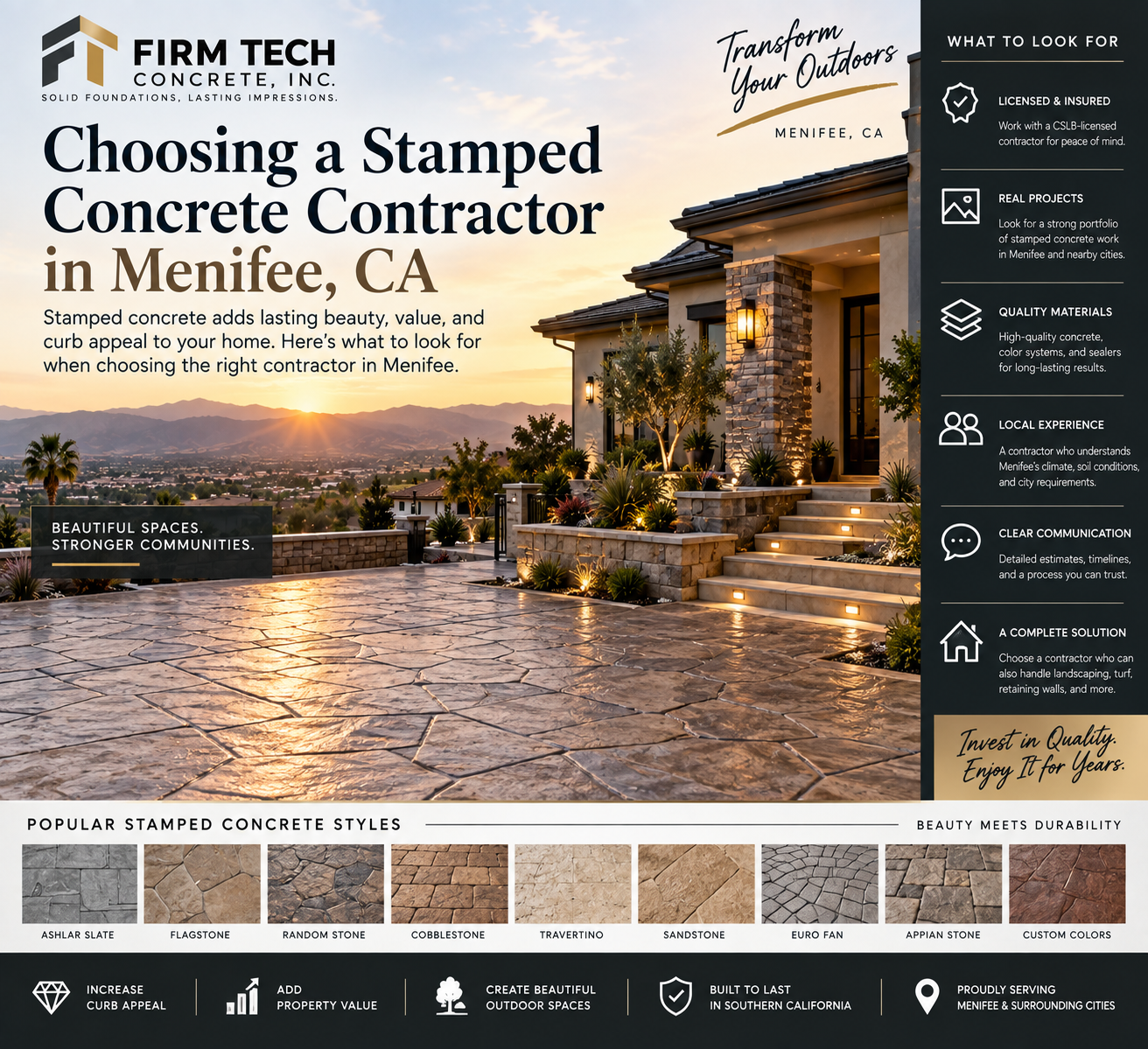
Concrete’s higher upfront cost can be offset further by keeping designs simple. Stamped patterns, inlays or complex curves add labor and materials. A straightforward slab with clean saw cuts and a broom finish can look elegant, especially when paired with complementary textures such as gravel or decomposed granite (DG).
Mixing Materials to Stretch the Budget
When budgets are tight, mixing hardscape materials allows clients to enjoy a more generous layout without overspending on any single product. I’ve designed yards where a central concrete patio is surrounded by bands of DG, gravel or river rock. This reduces the total square footage of concrete while still providing plenty of usable space. It also adds visual interest and allows for plantings or drainage areas in between.
In Southern California we’re lucky to have access to attractive local stone. Southwest DG and local river rock avoid import tariffs and long shipping distances, making them more affordable. Mexican beach pebbles are beautiful but pricey because they’re imported. Arizona river rock is a good substitute; it has a similar rounded appearance and earthy colors at a fraction of the cost. Choosing materials harvested in the U.S. keeps your project in budget and supports local suppliers.
Real‑World Case Studies
Many of my clients start by asking for the cheapest option because they’re overwhelmed or unsure. One family wanted a large play area for their children and space for weekend barbecues but assumed grass was their only affordable choice. After discussing the ongoing irrigation costs and maintenance headaches, they reconsidered. We designed a concrete patio large enough for tables and seating, bordered by DG pathways and a small patch of synthetic turf for barefoot play. The concrete took up most of that nine‑yard delivery, which lowered its unit cost, and the DG allowed their project to feel expansive without adding maintenance. A year later they told me their water bill had dropped and their yard still looked inviting.
Another client loved the look of dark Mexican beach pebble but couldn’t justify the price. I suggested Arizona river rock. It isn’t quite as smooth or black, but it has a warm, natural feel that complemented their house. By saving money on the rock they were able to invest in colored concrete for their front walkway and they’ve received compliments ever since.
Protecting Your Budget Without Compromising Joy
Often the real key to staying within budget is phasing the work. I encourage clients not to install something they don’t love just because it fits their current wallet. Breaking a project into two or three stages means you can pour the main patio now and finish a decorative seat wall or fire pit later. It avoids the heartache of settling for a feature you’ll end up ripping out. If your house is your forever home, invest in materials that make you happy every time you step outside. If you plan to sell in a few years, prioritize curb appeal nice walkways, simple patios and skip elaborate features that only you will enjoy.
Conclusion
“What’s the cheapest hardscape material?” isn’t a straightforward question because the cheapest up front often costs more over time. From my perspective, concrete offers the best value in terms of durability, maintenance and property value, especially when ordered in quantities that take advantage of full truck loads. When budgets are tight, mixing concrete with DG or locally sourced rock can create a beautiful yard without breaking the bank. Above all, choose materials that you genuinely like and that suit how you’ll use the space. Your outdoor living area should bring joy, not regret. As I tell my clients: invest in what you want to see every day and phase the rest don’t let budget pressures push you into a surface you’ll hate.
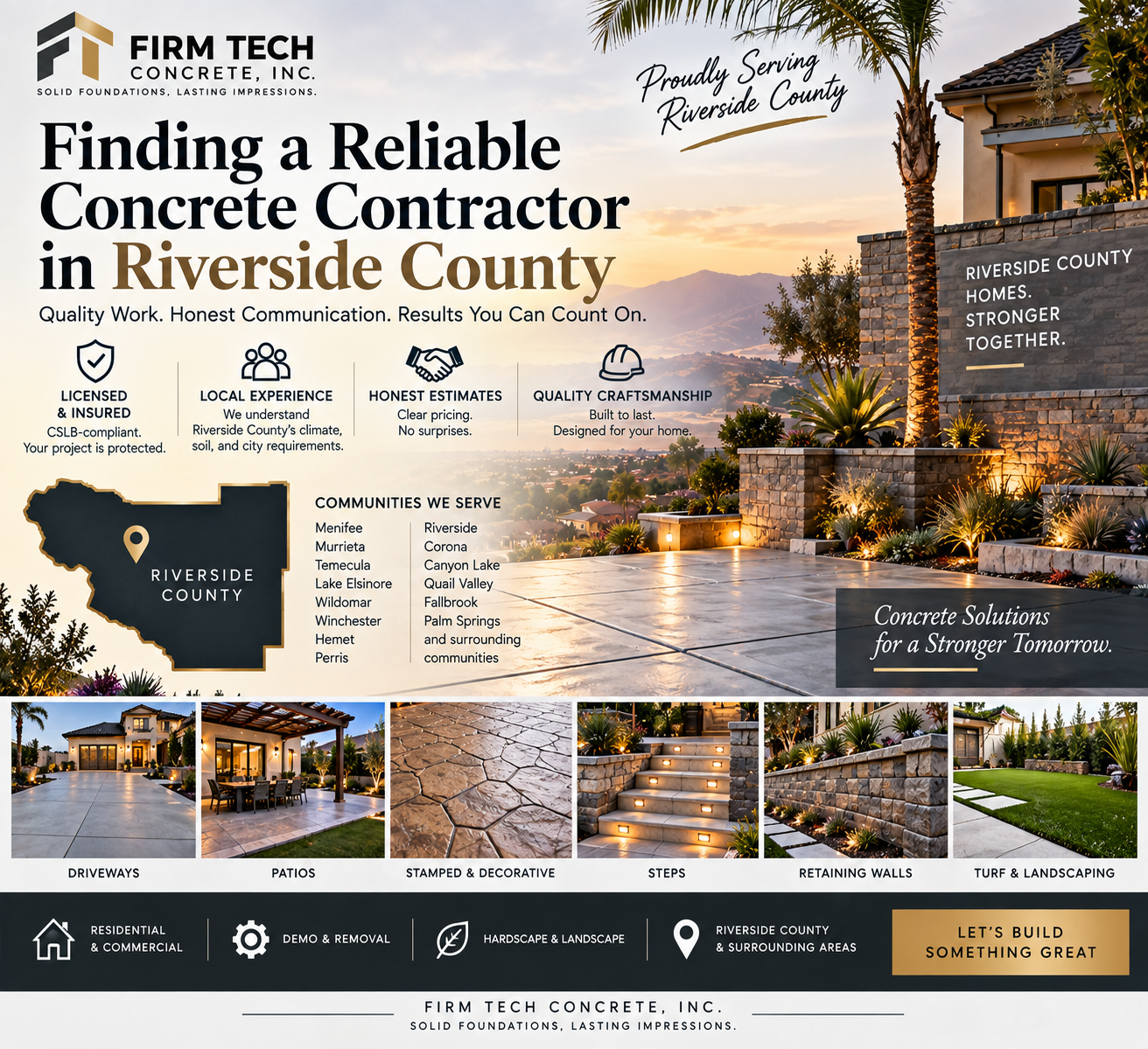
How to Find a Reliable Concrete Contractor Near You: A Contractor’s Perspective
Learn from a licensed Southern California contractor how to find a trustworthy concrete professional. Discover why cheap bids can cost more, what qualifications to look for, questions to ask, and tips on planning, warranties and phasing projects to balance cost and quality.
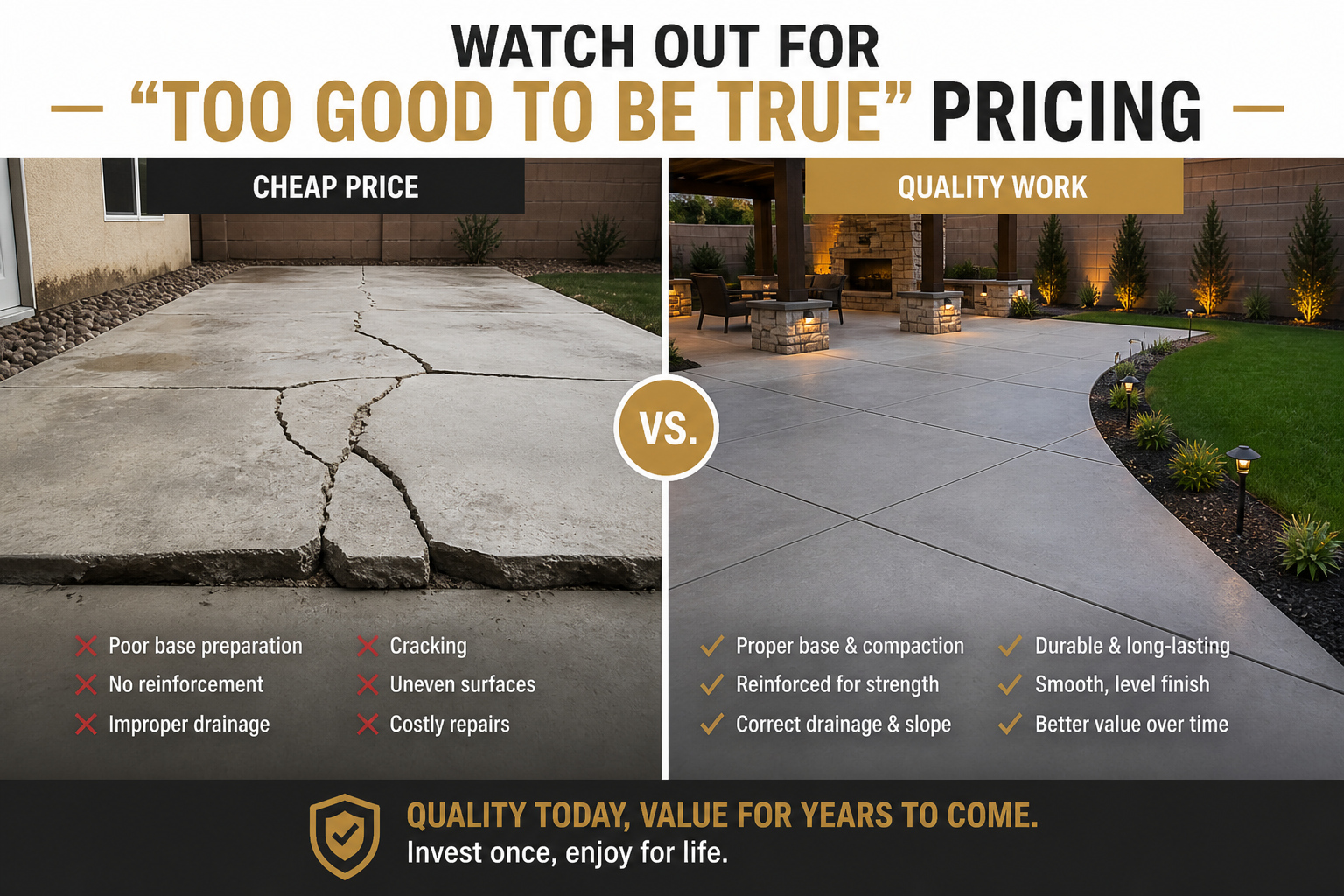
When you’re investing in concrete work around your home whether it’s a patio, driveway, retaining wall or full backyard makeover the contractor you choose can make or break the project. As a licensed concrete and landscape contractor in Southern California, I’ve seen firsthand what happens when homeowners base their decision solely on price. Below are lessons and insights drawn from my experience to help you hire a reliable professional and avoid costly mistakes.
The cost of cutting corners
A few years ago, I was contacted by clients named Ruben and Jenny who wanted a complete backyard remodel with retaining walls, artificial turf, trees and more. I was swamped at the time and couldn’t respond as quickly as they needed, so they chose the cheapest bid from another contractor. Midway through the job, that contractor walked off the site after taking their money. The retaining wall had no footing, the turf base was too thin, and nothing was level. I ended up tearing out the shoddy work and rebuilding almost everything.
It was a painful lesson for my clients: a low price often leads to shortcuts, poor materials and extra costs down the line. In this case, they spent more than if they’d chosen a reputable contractor from the start. I now make it a point to educate homeowners quality work costs more upfront but saves money and headaches later.
Verify licensing and specializations
One of the first questions to ask any concrete contractor is whether they are licensed. Licensing ensures they’ve met specific requirements and carry the necessary insurance. Don’t be shy about asking for proof.
You should also determine a contractor’s area of expertise. Some focus solely on walls or artificial turf, while others specialize in concrete. In my case, I started in arboriculture, expanded into landscaping and eventually obtained licenses for both landscape and concrete. This allows us to handle a wide range of tasks from tree care and irrigation to patios and decorative concrete in house.
Ask how long the contractor has been in business, whether they have experience with projects like yours, and what materials they use. If they hesitate to answer or can’t provide specific examples, consider looking elsewhere.
Questions I ask my clients (and why you should, too)
Before taking on any project, I sit down with homeowners to make sure we’re on the same page. Here are the key topics we discuss:
Vision: What do you want your project to look like? How do you plan to use the space? Clear vision helps the contractor design a solution that matches your goals.
Budget: Many homeowners have a ballpark figure but aren’t sure what things cost. I outline different options and explain how costs change with materials and scope. Being transparent about budget helps avoid surprises.
Process: I walk clients through every step excavation, base preparation, pouring, finishing and cleanup. Understanding the timeline and sequence builds trust and reduces anxiety.
Involvement: I encourage homeowners to stay engaged. This is their project, and they should feel empowered to ask questions, approve materials and make decisions along the way.
These conversations not only clarify expectations but also reveal red flags. If a contractor isn’t willing to discuss details or keeps you in the dark, be cautious.
A success story: preparedness wins
On a recent project in Palm Springs, I was one of several bidders. Even though my bid wasn’t the lowest, the client chose us because we came prepared. We brought samples of stamped concrete patterns, turf and stone, photos of previous projects, and a clear plan. The other contractors showed up without examples and couldn’t explain their materials.
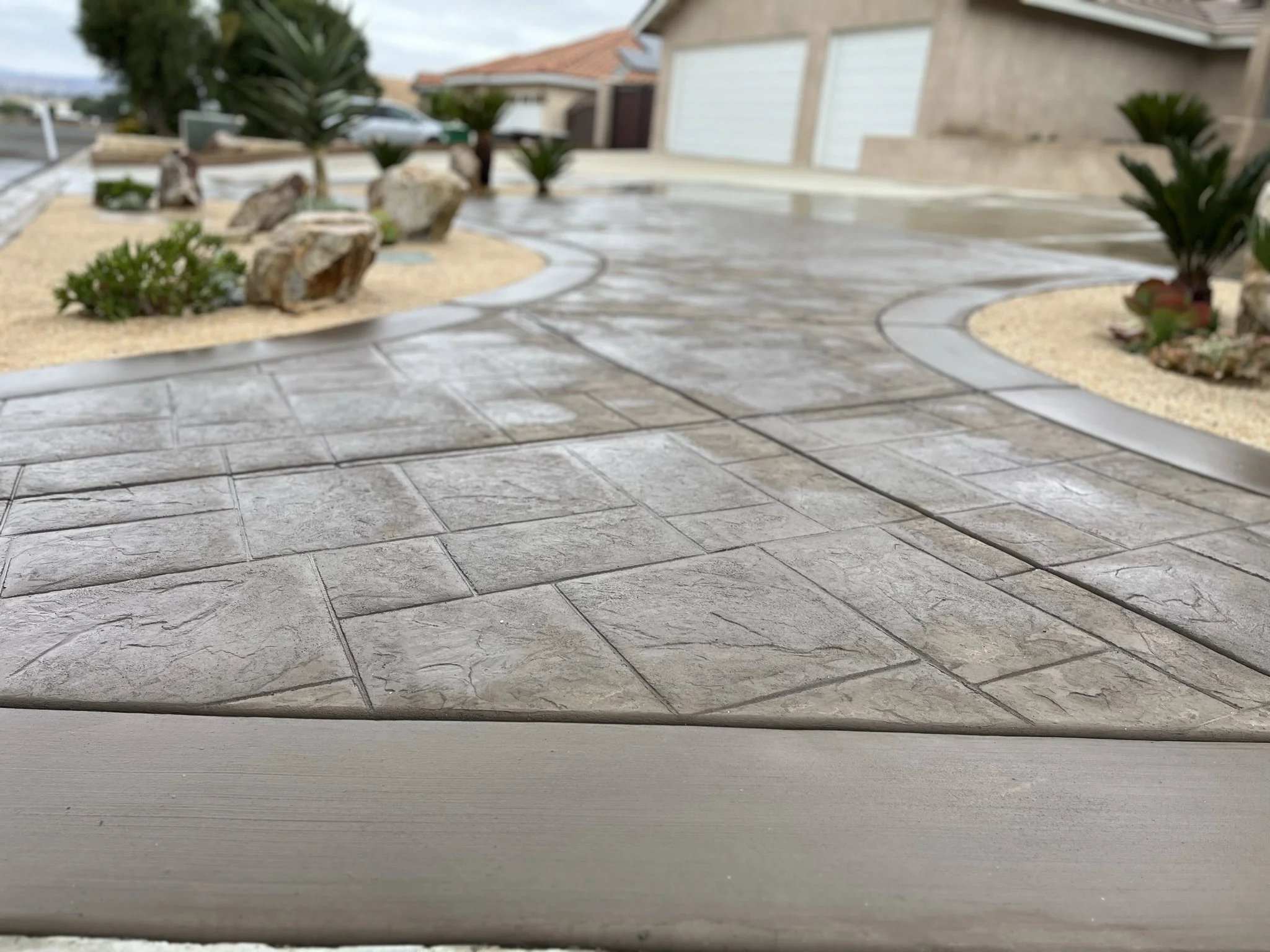
The job involved demolition, grading, drainage, installing stamped concrete (ashlar pattern in charcoal color), artificial turf and planting areas. Because I was on site every day managing my crew and communicating with the client, the work went smoothly. The finished patio was flawless, the turf lay perfectly, and the client was so satisfied that I gifted him a water fountain as a thank‑you.
The lesson: preparation and professionalism trump low bids. Homeowners appreciate a contractor who knows their craft and can demonstrate it upfront.
Hidden costs and planning ahead
Concrete work isn’t just about pouring a slab. Site conditions drainage, soil compaction, slopes can add complexity. On new builds, I often find insufficient drains or unstable soil that require extra excavation and materials. That’s why I advise homeowners to:
Address drainage and elevation at the planning stage. Poor drainage can lead to cracks or settling; fixing it afterward is far more expensive.
Run utilities beforehand. If you ever plan to install irrigation lines, lighting or a future outdoor kitchen, install conduits or sleeves before pouring concrete. Once the slab is in place, adding utilities requires cutting or drilling into the concrete.
Be flexible if issues arise. Buried debris, tree roots or unmarked pipes can appear during excavation. A reputable contractor will stop, explain the problem and discuss solutions before proceeding.
Unexpected costs aren’t always avoidable, but clear communication and proper planning minimize surprises.
Warranty and follow‑up
My team doesn’t pack up and disappear after finishing a job. When we lay sod, I check in for 30 days to ensure it establishes properly. For concrete, I call or visit months later to see how it’s holding up. Building relationships this way shows clients we stand by our work.
If something settles or cracks unexpectedly, we fix it. That’s the essence of a good warranty confidence in your work and a commitment to make it right.
Balancing cost and quality: the staged approach
Sometimes homeowners have a big vision but a modest budget. Instead of compromising on materials or workmanship, I recommend tackling the project in stages. For example, we might start by grading the yard and installing drainage and a patio. Later, we can add a pergola, outdoor kitchen or additional landscaping.
Phasing allows you to use proper materials and methods at each step without sacrificing quality. While it may take longer to reach the final vision, the finished product will meet your standards and last longer than a rushed project done on the cheap.
Final thoughts
Hiring a reliable concrete contractor isn’t complicated if you know what to look for. Focus on:
Choosing a licensed, insured professional with experience and specializations that match your project.
Reviewing their portfolio and seeking references from past clients.
Having open discussions about vision, budget and process.
Being wary of low bids that seem too good to be true.
Planning for drainage, utilities and unexpected conditions upfront.
Selecting someone who offers a strong warranty and follows up after the job.
With these guidelines and the lessons I’ve learned on real job sites, you’ll be well on your way to finding a concrete contractor who delivers high‑quality work and peace of mind.
How to Find a Reliable Concrete Contractor Near You: Lessons from the Field
When it comes to concrete projects, choosing the right contractor makes all the difference between a lasting success and a costly redo.
When it comes to concrete projects, choosing the right contractor makes all the difference between a lasting success and a costly redo. I’ve seen it firsthand. In fact, let me tell you about a time...
I had clients Ruben and Jenny who, in a rush, hired the cheapest bid. The contractor walked off mid project, leaving a mess. Their retaining wall had no footing, the turf wasn’t leveled, and they called me to fix it all. We worked with what we could, but it taught me and them that quality matters more than just the price tag.
So how do you find a reliable contractor? First, check if they’re properly licensed. Then ask what they specialize in concrete, turf, walls, or all of it. I emphasize my dual expertise in landscaping and concrete. When I meet clients, I ask about their vision and budget. I walk them through each step, ensuring they’re involved.
One success story was in Palm Springs. We won the bid despite being the highest. Why? We were prepared. We showed samples, we knew the materials, and the client trusted us. The result was a perfect stamped concrete, lush turf, and a happy client so happy, I even gifted them a water fountain as a thank you.
My unpopular opinion? Don’t just chase the cheapest bid. Cheap often means corners cut. I never cut corners. Hidden costs like drainage or elevations can sneak up on you if not planned. That’s why I lay everything out, and if surprises come, I address them transparently.
After a project, I don’t disappear. I follow up, check in, and ensure everything is still pristine. I build relationships, not just projects.
And if budget is tight, I suggest doing it in stages plan the vision and tackle it piece by piece. This way, you don’t sacrifice quality, and you end up with the yard you truly wanted.
In the end, a reliable contractor is one who listens, plans, and stands by their work during and long after the job is done.
What Questions Should You Ask a Hardscape Contractor Before Hiring? | Menifee, CA
It all begins here—your dream yard starts with choosing the right contractor. Hiring a hardscape contractor is a major investment, and asking the right questions can help you avoid costly mistakes.
At Firm Tech Concrete, Inc., we work with homeowners across Menifee, Murrieta, Temecula, Lake Elsinore, and surrounding areas, and we believe informed clients make the best decisions. Here are the key questions you should ask before hiring a hardscape contractor.
QUESTIONS TO ASK
🟡 Are you licensed and insured?
Always verify that your contractor holds a valid contractor’s license and carries insurance. This protects you from liability and ensures the work meets state standards.
Firm Tech Concrete, Inc. is fully licensed & insured (CSLB #1135853) with C-8 (Concrete) and C-27 (Landscape) classifications.
🟡 What experience do you have with projects like mine?
Not all contractors specialize in the same work. Ask to see past projects similar to yours—whether it’s stamped concrete, retaining walls, or full backyard remodels.
Experience ensures proper installation, design, and long-term durability.
🟡 Can you provide a detailed scope of work?
A professional contractor should provide a clear scope outlining materials, square footage, finishes, and timeline.
This helps prevent misunderstandings and ensures you know exactly what you’re paying for.
🟡 How will the project be prepared and installed?
Proper base preparation, grading, drainage, and reinforcement are critical to a long-lasting project.
Cutting corners here can lead to cracking, settling, or drainage issues down the line.
🟡 Do you handle permits if needed?
Some projects require permits depending on the scope. A knowledgeable contractor should guide you through the process and ensure everything is done correctly.
🟡 What materials and finishes do you offer?
Ask about your options—broom finish, stamped concrete, colored concrete, turf, gravel, and more.
A good contractor will help you choose materials that match your style, budget, and long-term goals.
🟡 What is the project timeline?
Understanding how long your project will take helps you plan accordingly. Timelines may vary based on size, weather, and complexity.
🟡 Do you offer a warranty?
A reputable contractor stands behind their work. Ask what is covered and for how long.
🟡 How are payments structured?
Payment schedules should follow California CSLB guidelines. Be cautious of large upfront payments and ensure progress payments are tied to completed work.
🚩 RED FLAGS TO WATCH FOR
• No license or insurance
• Vague pricing or no written contract
• Extremely low bids compared to others
• No portfolio or references
• Pressure to pay large deposits upfrontChoosing the right contractor makes all the difference in your project’s success. At Firm Tech Concrete, Inc., we pride ourselves on transparency, quality craftsmanship, and delivering outdoor spaces built to last.
📲 Call or Text: (909) 485-2095
🌐 Visit: firmtechconcrete.com
📍 Serving Menifee, Murrieta, Temecula, Lake Elsinore & surrounding areas
💰 Financing AvailableFirm Tech Concrete, Inc. – Solid Foundations, Lasting Impressions.
Your dream yard starts here.

