

What’s the Cheapest Hardscape Material for Your Budget? A Landscaper’s Perspective
Discover how to choose budget‑friendly hardscape materials that look great and last, using concrete, decomposed granite and locally sourced rock.
Introduction
When homeowners in Southern California ask me, “What’s the cheapest hardscape material I can use?”, my answer is often a conversation rather than a quick quote. As a landscape professional, I’ve learned that the cheapest option on paper rarely gives clients the best return on their investment. Budget‑friendly hardscapes should balance upfront cost with long‑term maintenance, durability and the way your outdoor space makes you feel. From years of projects in Lake Elsinore and beyond, here’s my take on how to make that decision wisely.
Understanding Cost versus Value
The temptation to go with the least expensive material is understandable, especially when you’re paying out of pocket for something you can’t easily pick up and return. However, I’ve seen many homeowners regret choosing the absolute cheapest option. Grass, for example, seems affordable until you factor in the monthly water bills, mowing, fertilizers and the time it takes to keep it green. Gravel might save money up front but can scatter underfoot, making it uncomfortable for kids to play or guests to walk in heels.
Concrete often isn’t the cheapest line item, but it provides the best balance of low maintenance and longevity. It doesn’t need watering, it doesn’t shift or erode like loose stones, and a well‑done concrete patio or driveway can increase property value. In many cases, a quality concrete job outlasts other materials, meaning you only pay once instead of paying again in five or ten years when a cheaper surface starts to fail.
The Sweet Spot for Concrete Orders
One of the secrets I share with clients is that ordering concrete in optimal quantities saves money. Ready‑mix suppliers price their deliveries based on load size. A full truck load about nine cubic yards will cover roughly 720 square feet of surface. Staying within that “sweet spot” makes the per‑yard cost significantly lower than if you order a few yards over or under. When clients have a smaller area, I often suggest combining that section with another project or partnering with a neighbor so both can take advantage of the best pricing.
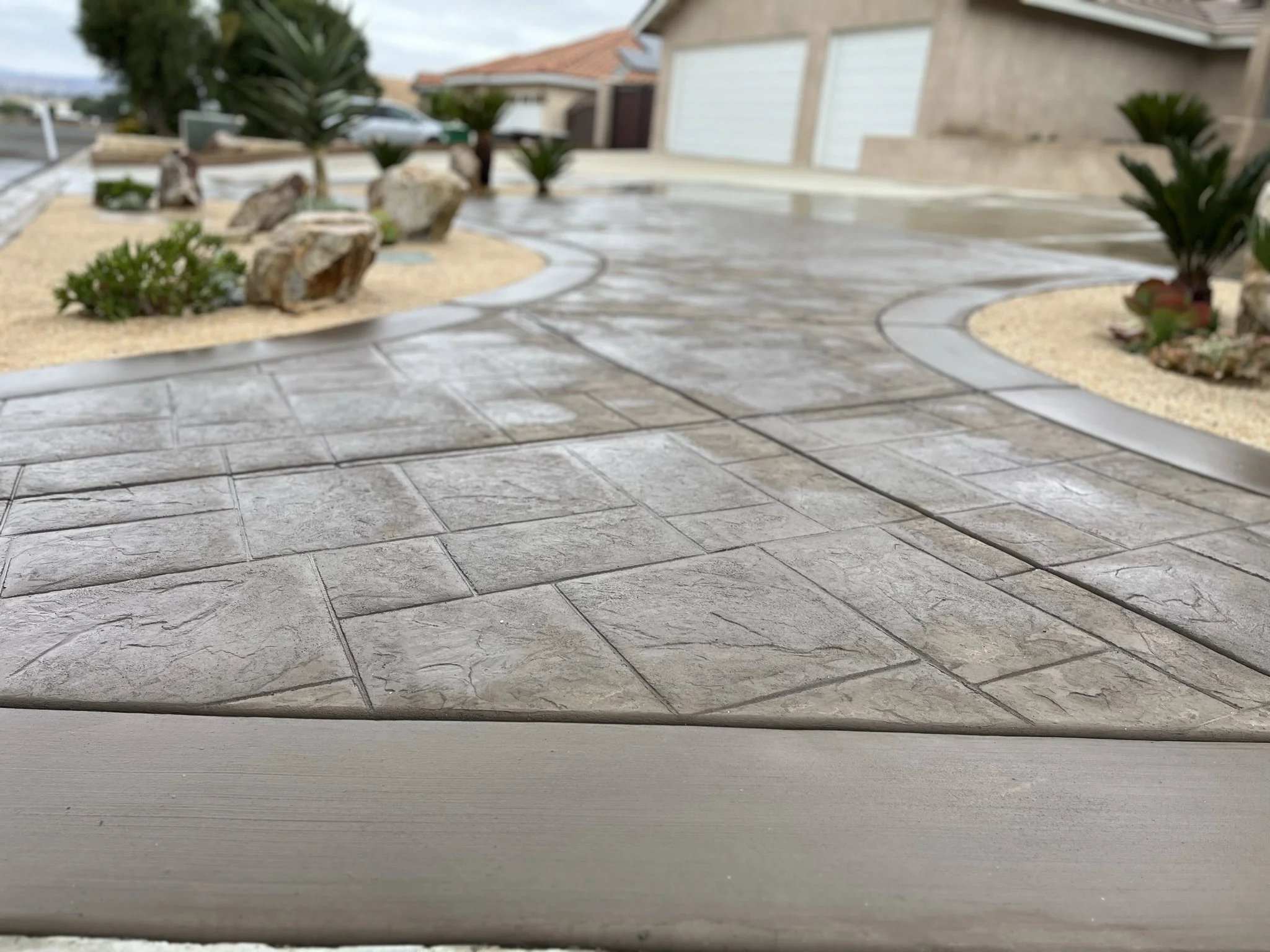
Concrete’s higher upfront cost can be offset further by keeping designs simple. Stamped patterns, inlays or complex curves add labor and materials. A straightforward slab with clean saw cuts and a broom finish can look elegant, especially when paired with complementary textures such as gravel or decomposed granite (DG).
Mixing Materials to Stretch the Budget
When budgets are tight, mixing hardscape materials allows clients to enjoy a more generous layout without overspending on any single product. I’ve designed yards where a central concrete patio is surrounded by bands of DG, gravel or river rock. This reduces the total square footage of concrete while still providing plenty of usable space. It also adds visual interest and allows for plantings or drainage areas in between.
In Southern California we’re lucky to have access to attractive local stone. Southwest DG and local river rock avoid import tariffs and long shipping distances, making them more affordable. Mexican beach pebbles are beautiful but pricey because they’re imported. Arizona river rock is a good substitute; it has a similar rounded appearance and earthy colors at a fraction of the cost. Choosing materials harvested in the U.S. keeps your project in budget and supports local suppliers.
Real‑World Case Studies
Many of my clients start by asking for the cheapest option because they’re overwhelmed or unsure. One family wanted a large play area for their children and space for weekend barbecues but assumed grass was their only affordable choice. After discussing the ongoing irrigation costs and maintenance headaches, they reconsidered. We designed a concrete patio large enough for tables and seating, bordered by DG pathways and a small patch of synthetic turf for barefoot play. The concrete took up most of that nine‑yard delivery, which lowered its unit cost, and the DG allowed their project to feel expansive without adding maintenance. A year later they told me their water bill had dropped and their yard still looked inviting.
Another client loved the look of dark Mexican beach pebble but couldn’t justify the price. I suggested Arizona river rock. It isn’t quite as smooth or black, but it has a warm, natural feel that complemented their house. By saving money on the rock they were able to invest in colored concrete for their front walkway and they’ve received compliments ever since.
Protecting Your Budget Without Compromising Joy
Often the real key to staying within budget is phasing the work. I encourage clients not to install something they don’t love just because it fits their current wallet. Breaking a project into two or three stages means you can pour the main patio now and finish a decorative seat wall or fire pit later. It avoids the heartache of settling for a feature you’ll end up ripping out. If your house is your forever home, invest in materials that make you happy every time you step outside. If you plan to sell in a few years, prioritize curb appeal nice walkways, simple patios and skip elaborate features that only you will enjoy.
Conclusion
“What’s the cheapest hardscape material?” isn’t a straightforward question because the cheapest up front often costs more over time. From my perspective, concrete offers the best value in terms of durability, maintenance and property value, especially when ordered in quantities that take advantage of full truck loads. When budgets are tight, mixing concrete with DG or locally sourced rock can create a beautiful yard without breaking the bank. Above all, choose materials that you genuinely like and that suit how you’ll use the space. Your outdoor living area should bring joy, not regret. As I tell my clients: invest in what you want to see every day and phase the rest don’t let budget pressures push you into a surface you’ll hate.